Showing posts with label Project Management Consultancy. Show all posts

Monday, 18 May 2015

Earthquakes Do Not Kill People, Improperly Designed Structures Do!

Earthquakes Do Not Kill People, Improperly Designed Structures Do!

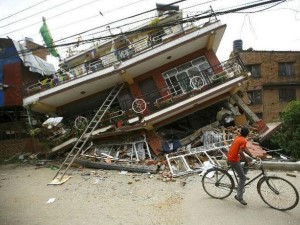
Earthquake is a natural calamity, which can occur any time anywhere. Buildings raised on stilts,with no walls in the ground storey — are more likely to collapse. Therefore, the Buildings must be built in such a way that they are safe during and after such occurrence.


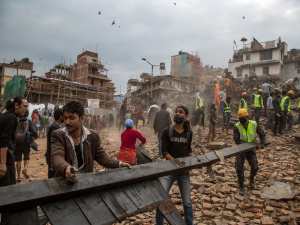
Nepal Earthquake Tragedy – Why did the quake cause so much damage?

12th May 2015 - Magnitude 7.3

25th April 2015 – Magnitude 7.8


Nepal is located in South Asia, home to one fifth of humanity and one of the most earthquake-prone regions in the world.  The region experiences some 100,000 minor quakes every year, and one of magnitude 8 or greater every 25 years. Yet lax building standards densely populated urban centers and poorly planned towns make the region's people extremely vulnerable to the fallout from tremors.

 “Most of the newly built houses that were destroyed by the earthquake in the commercial areas of Kathmandu had not followed the prescribed building code”, authorities have said.

Scores of houses that collapsed in places like Gongabu, Balaju, Kalanki, Thamel and Chabahil areas had initially acquired clearance to build two- or three-storey structures for residential use.

But the buildings were gradually transformed into high-rises without fulfilling the legal and technical requirements after the areas turned into commercial hotspots.


Read more at - http://www.masterspmc.com/blog/114-earthquakes-do-not-kill-people-improperly-designed-structures-do

Tuesday, 17 March 2015

Importance of Cost Management in Project Management

Importance of Cost Management in Project Management

Project management success depends on the ability to manage customer expectations, as well as the capacity to maintain a calibrated approach to all projects within the portfolio. And while time and resource issues are always significant, the factor that often has the biggest influence on project success or failure is whether or not the project team can – or cannot – optimize project outputs with effective cost management.

Construction cost is one of the most important criteria of success of project throughout the lifecycle of the project and is of high concern to those who are involved in the construction industry. In order to manage construction project successfully various procurement strategies have been introduced. In spite very rarely projects are completed within estimated budget.

Keeping construction projects within estimated costs and schedules requires sound strategies, good practices, and careful judgment.


Factors affecting Construction Cost Performance

There are several factors that affect the construction cost and various studies have been conducted to address these factors.

Low quality materials cause higher construction cost than expected because of the loss of materials during construction. This results from a lack of standards for materials and management systems. Lack of ability to prevent cost overruns or to control construction costs causes many construction companies to fail.

A major factor contributing to the time-delay and cost-increase is the inadequacy of money and time allocated to the design phase. The three main causes of time-delays are, in order, the number of change orders, financial constraints and owners’ lack of experience in construction.

Design changes, inadequate planning, unpredictable weather conditions; and fluctuations in the cost of building materials are other common factors causing cost overruns.


To sum up, following are the factors affecting Construction Cost management:

  • Fluctuation in prices of materials
  • Frequent design changes
  • Unforeseen ground conditions
  • Change in the scope of the project
  • Low speed of decisions making
  • Lack of communication among parties
  • Delay in Material procurement
  • Underestimate project duration resulting Schedule Delay
  • Owner interference
To avoid the above, project needs special knowledge and expertise to handle it ,which is most efficiently provided by Cost Managers of an effective PMC.

About Masters

Quite simply, Masters completely and clearly understands the importance of cost management as a subset of project management. It demonstrates this by enabling organisations to efficiently and effectively assess all costs associated with a construction project, including (but not limited to): original budget cost, current approved cost, forecasted vs. actual cost, and committed cost.

Our Cost Consultancy services are classified into four typical stages:

  • Pre contract
  • Tendering & Documentation
  • Post contract Cost Control & Monitoring
  • Post contract Financial Management

Some of our Cost Consultancy Projects are:


- Project management & Cost Consultancy for Novotel Hotel Mumbai
- Project Management & Cost Consultancy for The Imperial, Mumbai 
- Project Management & Cost Consultancy for Trilium Mall, Amritsar


Wednesday, 11 March 2015

Safety Has No Holiday

Safety Has No Holiday

This communication is to share the importance of supervision in effective safety management system in construction industry.

Even though fall of person / material from height is the biggest challenge and about 40% violations recorded on this account however inadequate passive protections, controls, failure to provide preventive safety equipment’s or   removing of such equipment’s, sub-standard materials etc. are repeat violations and unless stopped the probability will  remain as concern.

Prevention of incident is highly possible if hazard & risk involved in respective activity is communicated and verified by immediate supervisor of workmen. Effective supervision helps to ensure / minimize the severity & Probability together while safely execution at site. This is possible through processes of risk mitigation as below:


Hierarchies of safety controls shall be followed:
1st StepElimination / SubstitutionIf practicable,Eliminate the hazards altogether, or combat the risk at
source For example ・ Use a safe substance instead of dangerous one
2nd StepEngineering controlsMachine guarding,proper platforms, Acoustic enclosures, automation
instead of manual operations
3rd StepAdministrative controlsWork permit systems,Barricading, Limited access,providing training,
display of signage’s etc.
4th StepPersonal Protective
Equipment’s (PPEs)
If hazard cannot be avoided,protect yourself (It’s a last tool)


Read entire article at - http://www.masterspmc.com/blog/99-safety-has-no-holiday


About Masters


Masters is a leading Project Management company providing end-to-end solutions to the Construction Industry using the best of global standards and practices with primary focus on Real Estate sector.

Since its inception in 2004, the Company has evolved as a one-stop-shop service provider, offering a range of services to its Clients taking the project from start to finish – ranging from assisting them during per-development stages to feasibility analysis, pre-construction and construction & installation management services to all the way to a successful close out. In addition, Masters also specializes in Cost Consultancy and Design Development (Architectural as well as MEP) through their in-house team. Besides, Masters also offers Programme & Process Review Services and Quality, Cost & Safety Audit/ Monitoring Services and is well equipped to offer range of Development solutions (like turnkey, design & build, construction management at risk) to its Clients.

To know more about Project Management Consultancy, Contact us at :

Masters Management Consultants (India) Private Limited
New Udyog Mandir,
Kamanwala Chambers No.2,
Unit No. 7, Ground Floor,
Mugal Road, Mahim (West),


Tuesday, 20 January 2015

Common hurdles faced by PMC's

Common hurdles faced by PMC's 

Project Managers across the world face challenges on a day-to-day basis, not only on project levels but also at the organizational level. While most of these challenges are easy to resolve, whilst some are which need a more dedicated and systematic approach to resolve, especially when dealing with resources of the home organization.

Masters, like any other professional company, have not remained inexperienced from such hurdles during their journey, but have certainly resolved the obstacles; in their own ways!
Some of the most common hurdles faced by Project Managers are summarized below, to which, I bet, most of my colleagues would agree:

1.Lack of clarity on the project scope
The project scope/ brief which are supposedly THE key (!) documents forming the basis for all stakeholders as well as the teams to develop the project, plus, also act as the guiding bible against which the project’s success can be weighed, are in most common scenarios found either not appropriately defined or are all together missing!
Masters, with its experience of 10 years, insists on the importance of identifying the project scope in the initial phases of the project, which is in an agreement amongst all the stakeholders. Project scope definition not only reduces the project changes (which in turn also relates to the project timelines + project costs) but also minimizes the risk of key scope items being left-out.

 2.Scope Changes
This comes into picture only if the project scope in the first place was ever defined!
Scope change refers to any change that occurs after the initial project scope (if) has been agreed and signed-off. Some scope changes might be easy to manage and may not affect the project (timeline/ cost/ quality); however it will greatly depend on the time at which the change is initiated! 

To avoid the unnecessary impacts on time/ cost & quality, Masters continues to insist on identifying the project scope which is all-inclusive in the initial phases of the project, when the damage towards changes is reasonable!

3.Absence of Realistic & Agreed Project Schedule
It is very important for the Project Manger to set a project schedule which is realistic and agreed by the project team including the Client and all stakeholders. A schedule which is not agreed by all is equal to not having a schedule at all!
Once, if the schedule is agreed, another problem that comes in then is the commitment to the project schedule. Lack of commitment towards the agreed project schedule leads to delay in project completion.

4.Client Approvals
While Masters work as a Client’s Representative, however, Client, who is the holder of the project, his approvals work as a stamp to proceed for all activities on the project at each phase.These approvals are not needed only to proceed but they also signify Client’s conformance on the design/ documentation produced during each of the project stages.
As a Project Manager, one integrates the time-line for these approvals in the overall project schedule to ensure timely sign-offs. However, unfortunately, it is often observed that formal approvals are either never provided or if provided they take much longer than the time allocated in the project schedule; project schedule which initially was signed off. Therefore, the works are either proceeded with without an approval in place (which leads to drifts at a later stage) or with approvals which are much delayed (which leads to project delay).

5.Project Funding
Since Project Managers are usually not directly involved in the project funding matters which are undertaken by the Clients teams, Project Managers continue to remain in dark on this most important element of work as this has a direct impact on payments to be made to the contractors, vendors and service providers.

While getting work done is the prime role of Project Managers, however, in the absence of updates on monies fronts, the Project Managers are at times trapped between the contractors & clients as non-payment or delays in payment is a major issue which affects the project performance and causes project delays.

6.Timeframes for authority approvals
Every project requires approvals from various authorities ranging from the local municipalities, to utility service providers, depending on the projects size, use and location.

Although on the condition of approvals the project schedule/ cost & development is based, however, approval processes as are always complicated requiring a variety of supporting documentation and since the timeframes for these varies authority-to-authority and are often open-ended, varying on a case-to-case basis therefore there is always an uncertainty on this aspect of the project due to which most projects get delayed thereby also increasing the project cost.

7.Poor communication between teams
Most important stigma!
Clear communication between the project team is an obvious and most important requirement on any project; however it may be one of the most difficult tasks. Lack of communication or poor communication leads to issuing incomplete/ partial or unclear instructions thereby affecting the project scope/ deliverables and performance of the team.

During project execution, the contractors often communicate with a number of project team members (including the client, consultants and Project Manager) in critical situations and in the absence of properly documentation, such instructions leads to disputes which hinder the project progress.Masters maintains the importance of proper communication protocols which must be agreed and strictly followed on all projects ensuring proper flow of information and instructions to relevant parties.

8.Lack of knowledge transfer to the delivery team
In most projects, where the initial pre-construction stages are undertaken by a separate team than the construction team (who takes charge during the construction stage), during the process of knowledge and information transfer between the teams, minor details and intricacies are generally overlooked. Such lapse of information, which may be minor in nature, but if not acknowledged appropriately and in time, usually turns into major changes and affect the project in a big way in terms of time, cost and quality.

Masters, with its experience of working in various types and natures of projects, understands and acknowledges the importance of building a right team as well as maintain thorough systems & documentation through the life cycle of the project ensuring that no project information is overlooked at any stage of the project.

9.Resource sharing
 At times during multiple projects, when skilled resources are shared between projects, the team’s performance gets reduced on one of the many assignments due to pressure and commitments, thus affecting the project.

At Masters, the higher management therefore understands the importance of having in place a core team which supports the project teams at all times thereby ensuring that that the resources are not over-committed or burdened.

10.Project team’s roles and responsibilities
Poorly defined roles and responsibilities generally lead to overlap of roles which results to confusion and conflicts between the project team. While overlooking an important responsibility can hinder the project progress, at the same time, stepping over other team member’s responsibility also affects the project performance and waste valuable time.
To avoid such occurrences, Masters strongly follows a viewpoint of defining clear and detailed roles & responsibilities of the project team as well as all the stakeholders at the project initiation only as a part of the Project Execution Plan.

Sujata Gupte
(Design Manager)
Masters Mumbai

Friday, 26 December 2014

Celebrating a decade of glory...and the rest is history!

Celebrating a decade of glory...and the rest is history!

Being a successful Project Management Consultancy (PMC) i.e. conceiving and managing the progress of real estate projects ensuring close co-ordination between various agencies and Clients and delivering a successful project in line with Clients objectives of time, cost and quality, is no easy victory!! It requires proper planning, analysing problems and advising solutions, optimizing resources, allocating and integrating inputs (backed with skills and manpower) to create a masterpiece. From organizations drawing upon the services of a PMC merely for gaining external advice, Project Management, in recent years has come to be seen as a discipline many successful companies adhere to, as they function as bridges for information and knowledge. To stay ahead of competition, all companies both big and small, at some point of their growth cycle, requires Project Management as it streamlines the complex processes, reduces time by bringing in cross-functional competencies.

Masters - a leading Project Management company and synonymous with names like The Fairmont, Godrej, Parsvanath, Red Fort Capital, Marriott, L&T Pheonix, Indian School of Business, Tata Realty, Forum Group, Harvard Business School, Dr. Reddy’s Laboratories, Runwal, Hiland Group, Ascendas, JP Morgan, GE Real Estate amongst many others, has evolved over the last 10 years, from a small-garage-office to having pan India presence and big ticket accounts in its kitty. As Masters celebrates its decade-long journey today on 27th December 2014, we can’t help being nostalgic and wish to take you down the memory lane, recounting the good-old days, challenges that came along and milestones we crossed along the way.

Humble beginnings:
Started back in December 2004, Masters’ inception was more like serendipity. Born out of a Project in Mumbai-The Imperial project at M.P. Mill Compound in Tardeo, was a take-it-or-leave-it decisive moment for the founder and co-founders when they were asked to construct the two tallest towers in the Country. Armed with Engineering degrees, diverse professional background and loads of passion, the team turned the challenge to an opportunity-creating history and the challenge was accepted and Masters was conceived to take on the challenge!!
From a single project to handful of projects, over the years, Masters has developed itself as a name to reckon with who companies think of creating value through Project Management Consultancy. Today the Imperial towers (residential complex) stand tall in the heart of Mumbai city as a testimony to Master’s success, being one of its flagship projects.
Over the next few years, Masters was successful in adding Real Estate Advisory, Cost Management, LEED Green Building Advisory, Architectural & Engineering Design Development divisions to its service portfolio, making it a full-service Project Management Company it is today.
Another exciting area of development for Masters has been the evolution of Development Management division. This has been a feather in the cap as it provides added value to clients by assisting them with the identification of best land use, funding and pre-conceptualizing projects.
In retrospect
Started under the leadership of Mr. Jaspreet Singh, CEO and MD of Masters, Mr. Singh’s vision behind founding Masters was to address the dire need of a professional Project Management company in the country. Mr. Singh along with his co-founders Mr. N.H. Narayanan, Mr. Sanjoy Datta and Mr. Ravinder Bassan had the undying confidence in his team, which came with the knowledge & exposure of best of international systems and standards and at the same time being able to integrate that experience with the particularities of the Indian Real Estate Industry.
Started as a small office at the project site with a handful of 10 team-members, Masters has grown into a big organization which has pan India footprints employing a whopping 200 + people as of today. The Company has its head office in Mumbai and is operating in all big cities like Delhi, Hyderabad, Bengaluru and Kolkatta while also offering its services to clients in emerging markets like Amritsar, Jaipur, Kota, Jaisalmer, Vishakhapatnam, Nagpur, Chennai, Goa, Siliguri and Jamshedpur.
In addition to investing in the right kind of talent and markets, Masters was also one of the early adopters of ISO standards. In the very first year of its inception, Masters decided to get certified to The Quality Management System ISO 9001, an International Standard, not merely to comply to market requirements but the Company wanted to embed ‘systems’ in its DNA and set clear guidelines to make sure that documented procedures and best practices (in line with an International Standard) are being followed in all its processes across all geographies. The company successfully upholds the ISO 9001:2008 certification even to date.
Recounting Milestones
Each year at Masters has been that of growth and noteworthy. Just after its inception in December 2004, in the year 2005, first Value Engineering exercise was undertaken for the Imperial, the MMC website was then launched for increasing awareness not only of Masters but also of Project Management techniques encouraging the Indian industry to adopt such professional platforms to enhance the real estate industry more rapidly by completing projects in time, cost and quality.
The Company was soon after, appointed as a PMC for DELL in Hyderabad which was their 2nd project and the formation of Thompson Cole followed with Mr. Philip James to represent Masters in Dubai and this marked the first international entry of Masters.
The year 2006 witnessed a lot of key developments like establishment of Hyderabad Regional Office on 1st April 2006 under the leadership of Mr Vishnu Prasad and Masters being appointed as a PMC for S.P. Infocity at Gurgaon, L&T SEZ Project at Hyderabad and launching of the Blog. Launch of blog signifies that the count of team had in a very short span increased manifold. 

Another significant turn was bagging the Indian School of Business project (designing and executing Faculty Housing) at Hyderabad. It was an out-an-out project development consultancy where Masters designed, constructed and monitored the project providing an end-to-end service, from architectural & services design to site-related work.The Company also took up Shopper’s Stop fit-outs at Noida, Delhi and Kolkata. In just 2 years, Masters had entered most of the geographies marking a pan India presence.
In the subsequent year, i.e. 2007, Masters took up theirfirst Technical Due Diligence assignment for Ascendas Property Fund Singapore, which was undertaken at Chennai in 2007, thereby formalizing the Advisory & Technical Due Diligence Vertical under the direction of Ms. Ipsita Mahajan. The first hotel project – renovation of Ramada Caravela Resort at Goa and a Fairmont hotel project at Jaipur and then Novotel Mumbai, also commenced in 2007. 2007 also saw the establishment of Kolkata Regional Office on 10th October 2007 under the leadership of Mr Dhruba Bhattacharya. This was then followed by formally establishing the Hospitality division by Mr. Martin Fine in 2008.
In 2009, the Company started its first factory project for a Mexican client called Metalsa India Pvt. Ltd and executed the first LEED Green Building Advisory exercise in an advisory capacity to Dr. Reddy’s Laboratories, undertaken by Ms. Neha Trivedi, LEED AP. This year also witnessed the Inauguration of Corporate Office at Mumbai on 1st June and in the next month, July 2009; the Imperial project was completed and successfully handed over, which continues to be the tallest standing towers in India, even today!
The year 2010 was indeed significant and memorable as Masters had undertaken their first off-shore PMC assignment in relation to improvements at the Johannesburg Sun Hotel, Johannesburg, South Africa and also undertook their first Development Management exercise in the advisory capacity to S.P. Real Estate, undertaken by Mr. Ramy Makarem, Development Director at Masters. Having continuously cherishing the growth chart, this year saw one of the most tragic incidences; Masters lost one of its very senior key employees and one of the co-founders at Masters, Mr. N H Narayanan, Vice President. His key contributions and youthful spirit will always be remembered.
Masters then undertook its first independent Cost Management exercise in the year 2011 thereafter setting up of a separate Cost Management Division under the leadership of Mr Chandresh Dedhia and establishment of Delhi Regional Office on 10th March 2011 headed by Mr Sanjeev Sachdeva. 2011 was a crucial year also in terms of re-visiting and improvising Masters Processes by introducing an enhanced version of Procedures further streamlining the activities and offerings across the board, under the leadership of Mr Robert Perkins, Operations Director at Masters.
Successively, in the year 2012, Masters Design Studio (MDS) offering Architectural and detailed design and drawings was established at Kolkata. And subsequently, MDS was expanded to include Interior Design and MEP Services Division in the year 2013.
2014 has been a year of devising strategies for tomorrow where the company adopted modern techniques for offering services and has worked towards developing an in-house online platform for their services which would be launched in 2015. 2014 has also been a year for pondering on international expansion by looking through various proposals and the company has eventually signed MoU’s with various like-minded organizations overseas and would now be working more closely with them with an objective to develop the Indian industry further by bringing in their experience in the Indian market as well as making a strong foothold in their markets with our expertise in Project Management Consultancy.
Blocks to success
Just like any growing company, Masters too faced certain challenges in the last 10 years, while setting up. Getting like-minded people together under one roof and to remain neutral and unbiased with various stakeholders (as a PMC works on behalf of contractors and stakeholders and represents the clients) while maintaining the periphery of its core values viz-a-viz Integrity, Transparency and Honest was a tough task.
However, once that was dealt with, many companies were hit by a global economic occurrence-Recession, in the year 2008. Project Management, an activity that helps clients ease out their job, was being looked at as an overhead and hence many projects had been shelved during the economic downturn. However, the team at Masters decided to stick together and build new avenues. The Company then started looking out on various other verticals and opened separate divisions for Cost Management and Design Services and introduced Development Management which helped the Company bounce back, eventually.
Masters may have seen various hues and shades of harsh winters but over the years it has developed a strong base of trusted partners and clients and has penetrated through many influential markets that make it sturdy to withstand any challenge head-on.
Greener Pastures
Talking about the journey, it is interesting to note and make a special mention of commercial activities that the Company started that were not just lucrative but continue to add value even today. Although started with just The Imperial Towers as the only project, Masters’ presence began taking shape by bagging few key projects like DELL, L&T Pheonix and ISB in Hyderabad, Infogain, SP Infocity, Parsvanath Towers, Vivanta by Taj in Delhi-NCR, Tata Realty’s TRILIUM in Amrtisar, Godrej Prakriti in Kolkata and Novotel and Saifee Burhani’s Upliftment Project in Mumbai. Many years later, Masters has been successful in carving a niche for itself in the Indian market and operates out of full-service offices in Mumbai, Kolkata, New Delhi and Hyderabad. Each of the geographies while may have brought a few challenges initially, but they are now being explored for both small and big assignments across various services as end-to-end solutions.
Thursday, 25 December 2014

Masters First One’s in every sector!!

Masters First One’s in every sector!!

Masters expanded its horizons over the years and like the first born child, the first projects in the different fields hold a special place as they are the foundation blocks which made Masters what it is now. Below we can see the first footprints of MASTERS in the individual stream.
RESIDENTIAL: Imperial Towers, Mumbai
Picture 1Oh!! MASTERS entered into the Residential Construction Industry and How. We jump started with a king size project i.e. the Imperial Towers which is touted as the highest existing Residential towers in India. The Project is a flagship residential complex - 253 meter high, 60 storey towers with the finest of amenities, at the heart of the city of Mumbai. The towers are built with state-of-the-art technology & finishes and using international standards of construction. The towers include a podium of 10 storey height which houses car parking, a luxury spa, clubhouse & recreational facilities and a triple-height entrance lobby. In addition to the luxury high rises, also developed are 18 slum rehabilitation buildings of G+14 to G+21 storey height to house 2664 families.

HOSPITALITY: Novotel, Mumbai
In April 2007 Eastern International HOTELS Ltd. announced with pleasure that they would be re-opening their flagship hotel in Juhu Beach Mumbai, India, as the new Novotel Hotel. Entering into thePicture 2 Hospitality Industry, with this Project MASTERS grabbed the opportunity to work on the renovation of complete Hotel with the BUA of 150,000 sq. ft. and Project cost of 77 Cr. Since the Hotel is based on the seafront within Coastal Regulation Zone, the structure could not be demolished, but almost the entire infill walls etc were torn down to re- house building services and customize the guest rooms, public areas and BOH areas as per the new operator's requirements. With the crucial contribution by MASTERS as the PMC the existing building was transformed it into a place ideal for business guests, as well as those on holidays. By the end of Jul 2009 on completion of Project The Novotel offered its Clients with 203 contemporary designed rooms having magnificent views of the Arabian Sea, meeting rooms seating up to 1000 participants, 4 specialty restaurants, a chic sea lounge, an outdoor pool, spa and fitness centre, it epitomizes a new approach to hospitality.

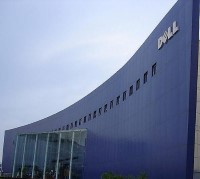
COMMERCIAL: DELL International, Hyderabad
Picture 3MASTERS tested the waters in the Commercial construction Industry and bagged the Project for Construction of the Dell International office Building located in Hyderabad. The Project was conceptualized in Jun 2005 with a Built Up Area of 6.00 Lack Sq. ft. Dell IT Campus is a 3,000-seat call centre for 24 x 7 operations. The building has a four storey entrance block, with other blocks of larger floor plate and multiple levels of parking.

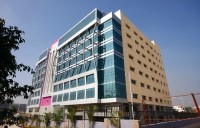
SEZ PROJECTS: L&T Phoenix, Hyderabad
Masters has worked as a PMC for the L&T Phoenix Infoparks for their SEZ in Hyderabad. The project also involved building an incubation space for its tenants. The site was 25 acres of land with 9 Picture 4state of art IT/ITES buildings each with an average BUA of 250,000 Sq. ft. with a Total Project Value of 406 Cr.

RETAIL AND OFFICES: Infogain (Noida) & Wells Fargo (Hyderabad)
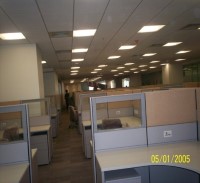
Masters has executed several interior fit-outs of which the interiors for Infogain at Noida, was one of the first. Infogain with a BUA of 90,000 Sq.ft is located in Noida NCR, India and Masters provided PMC and design services (Interior fit outs) for the Project. With this Masters also entered the field of Office interior fit outs with WELLS FARGO in Hyderabad. 
        picture 5                     Picture 6
Infogain, Noida                          Wells Fargo, Hyderabad

INDUSTRIAL: Metallsa, Jamshedpur
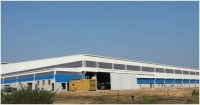
Picture 7With Commercial, Residential and hospitality projects in our hand, Industrial buildings were just another stepping stone. We commenced with working for the successful setting up of an industrial facility with BUA of 200,000 sq. ft.for a Mexican company's in their maiden venture in India for production of chasis for heavy vehicles for TATA - The complex housed a pre-engineered production building, administrative block, office, canteen etc. work.

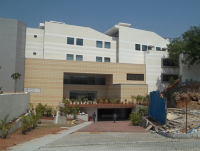
CORPORATE OFFICE: Dr. Reddy's Laboratories Pvt. Ltd., Hyderabad
Picture 8After successfully handling the interior fit outs of multiple offices Masters shouldered the responsibility of completing the base building and Interiors of Dr.Reddy's corporate office at Banjara Hills, Hyderabad. The building had a BUA: 179,000 sq. ft. and the total Project cost of 50 Cr.

Picture 9RETAIL MALL: Trillium Mall, Amritsar
Masters can boast about entering into the Retail Malls constructions with a fantastic project which was Trillium Mall built by Tata Group.
The 204 CR Trillium Mall located in the Civil Lines is spread over 10.5 Lac Sq.ft. of land feet devoted to shopping area. With its multiplex and banqueting facilities the Mall has been an attraction for the residents of the city residents Masters played a crucial role as the PMC in Tata Realty’s vision to serve the city and its surrounding areas, and provide the experience of grand shopping, entertainment and socializing.

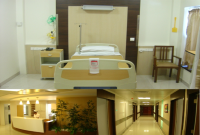
Picture 10HOSPITAL PROJECTS: Breach Candy Hospital & Research Center
Masters expanded its wings towards the medical facilities sector with the interior fit outs project of Breach Candy Hospital wherein our scope include structural strengthening works, complete refurbishment of two wards and the VVIP ward for one of Mumbai’s premier Hospitals having a built up area of 1 Lac Sq.ft and project Value of 4.5 Cr.


Dharmesh Gala 
(Project Manager)
Masters Mumbai

Tuesday, 23 December 2014

10 industry-changes the coming decade must experience

10 industry-changes the coming decade must experience

The last decade has seen significant changes in the construction industry in India. Whilst there has been technological advancement in the construction works, some aspects of the industry still remain incompetent and ultimately impact the project outcomes in terms of the cost, time and quality. We, as Project Managers, are the first to experience the effects of such project in-competencies.
 
Every project is distinct in its own respect. However, we may note that there are a few common issues with all of them. These issues if tackled in an efficient and organized manner may reduce a lot of our grief. The construction industries across the developed nations have a robust system which safeguards its participants in all respects. And whilst the Indian construction industry has not advanced to that stage, we remain hopeful that we can catch-up with the developed nations in a decade’s time.

Here are some of the key changes we would like to see in the industry:

1. Standard Contracts
Use of standardized contact forms for engagement of consultants, contractors and sub-contractors. The benefit of standardized contracts is that they are not biased towards the Client / the contractor and give fair terms of engagement to the parties involved. Indian Standards for construction contracts should be established similar to the FIDIC, Australian Standards, etc. Government agencies should make it mandatory to utilize such standard contract for all government funded projects.

2. Payment Regulations
Non-payment or late payment is a very common complaint in the construction projects, which sometimes results in delays and disputes between the parties involved. The government should formulate Regulations/Acts that can formalize the payment cycles and provide respite and formal channels of claiming the outstanding dues. Such cases should be handled by independent, government accredited bodies to expedite such claims and not follow the regular judiciary process which takes years to get a hearing on the case.
One such example is the ‘Security of Payments Act’ followed in Australia.

3. Occupational Health & Safety (OH&S)
Whilst the industry has seen a tremendous improvement on this front over the last decade, there is a lot more to be achieved. OH&S not just relates to wearing hard hats and safety vest but involves every aspect in which an occupational hazard can be avoided. OH&S is both generic and specific to the industry. The government should make it mandatory for all construction industry personnel to undertake a general induction on OH&S and issue certificates or license for the same. In addition to this, site OH&S induction should be made mandatory for every person entering the site.

4. Hazardous Waste Management
An issue that is highly talked about, yet, the most ignored when it comes to construction industry is Waste Management. In addition to air and water pollution, there are other more toxic pollutants that affect the environment and people exposed to it. One example is asbestos-health effects of prolonged exposure to asbestos are known to cause cancer. While asbestos is banned for use in European Union, Australia, Hong Kong, Japan, and New Zealand, its use is still prevalent in India. The government should make efforts to eliminate the use of asbestos in construction and also regulate the disposal of asbestos in a safe manner. 

5. Formal training for construction trades
Tradesmen in Indian construction industry often inherit the skills or learn by experience working on sites, which is not always a bad way to learn. However, the trade skills need to be recognized as vocational subjects in universities and formal training on best practices should be provided to the aspiring candidates. This will not only set standards to the trade but also recognize the trades as respectable and skilled professions. Skilled personnel on projects will reduce the amount of defects considerably.

6. Construction quality benchmarks
Quality often seems to be a variable factor with different contractors. It would be beneficial to set some standard benchmarks for the class of finishes. For example, concrete finish when used as a super-structure and when used as exposed concrete will be different. However, a standard guide which outlines the parameters of the different classes of concrete will greatly assist the designers and contractors to specify finishes.

7. Work Methods
India has a huge reserve of inexpensive manual labour, which is largely used in the construction industry. The use of machinery in construction, to some extent has been directly influenced by the availability of cheap labour in the country. While the last decade has seen some changes in this perspective, there are more aspects that can be adopted in the work methods. For example, use of plastering machines, use of stairform for staircase construction, permanent form systems for cores, etc.

8. Municipal approvals process
One of the most tentative/ uncertain events in the project schedule is the municipal approvals, which obviously impacts the overall project duration and ultimately cost. It would be ideal if the local municipalities regulate the approval process with definite timelines and provide transparency on the application status. Special approval authorities should be established for major projects, thus minimizing the work load on the regular approvals in municipalities.

9. Independent Certification
Once the initial project approvals are received for the project, ongoing approvals like the Commencement Certificates, Occupation Certificate, etc. are dependent on the visit from the municipal officer to the site and then the officer processing the necessary paperwork. This is a time consuming process and most of the municipalities are understaffed to undertake these visits.

In most developed nations, the same function is undertaken by an Independent Certifier, who is authorized by the municipal authorities and appointed by the Client. The introduction of independent certifier in the process reduces the already understaffed and overworked municipalities and also makes the process of certification quicker for the project team. This concept would greatly benefit in the Indian context.

10. Understanding professional indemnity
It’s a usual practice for service providers in the construction industry, who provide professional advice, to cover themselves by the professional indemnity insurance. Professional indemnity insurance covers the service provider from bearing the full cost for defending negligence claims made by the client.

Whilst we all understand the intent and extent of our professional indemnity, we as Project Managers, often find ourselves crossing boundaries. Example – It is often found that Project Managers end up providing sketches of architectural details at site. With all good intentions, it is provided in order to avoid delays; however are we covered for it? Does our professional indemnity insurance cover design services if we are project managers? The answer is no, unless you are a multi-disciplinary company. In case of a mishap resulting from the professional advice of individual Project Manager, the company would be liable for the negligence claims.

Industry professionals and companies need to appreciate their professional limits and instill  these limits as corporate guidelines.